
Alloy 6230 - AMS 5878, UNS N06230
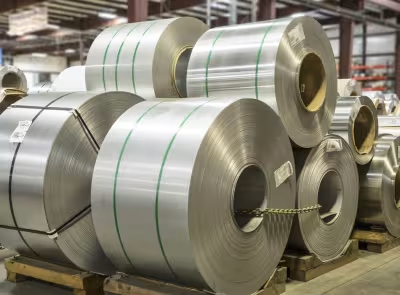
Alloy 6230 (UNS N06230, AMS 5878) is a high‑performance nickel‑chromium‑tungsten‑molybdenum alloy engineered for exceptional strength, thermal stability, and environmental resistance in extreme high‑temperature applications. This solid‑solution–strengthened alloy delivers outstanding performance in oxidizing environments up to 2100°F (1149°C), making it one of the most oxidation‑resistant nickel alloys on the market. It also provides excellent resistance to carburization, nitridation, and long‑term thermal degradation. Alloy 6230 is widely used in aircraft engines, land‑based gas turbines, chemical processing systems, and high‑temperature furnace components due to its superior creep resistance, fatigue strength, and metallurgical stability over extended service cycles. Its combination of high‑temperature mechanical strength and good room‑temperature fabricability makes Alloy 6230 a reliable choice for demanding environments.
Inventory Size Ranges for Alloy 6230
| Type | Size Range | AMS Standards | ASTM | UNS | ASME | Get a Quote |
|---|---|---|---|---|---|---|
| Coil | 0.020" - 0.125" | AMS 5878 | ASTM B 435 | UNS N06230 | ASME SB 435 | Get a Quote |
| Sheet | 0.020" - 0.125" | AMS 5878 | ASTM B 435 | UNS N06230 | ASME SB 435 | Get a Quote |
Characteristics of Alloy 6230
Alloy 6230 is known for its exceptional high‑temperature strength and long‑term metallurgical stability. The alloy resists oxidation up to 2100°F, supported by its high chromium content and micro‑additions such as lanthanum, which enhance oxide scale adherence during prolonged thermal exposure. It exhibits excellent carburization resistance, making it suitable for furnace retorts, heat‑treat fixtures, and chemical‑processing atmospheres. The combination of tungsten and molybdenum provides strong creep resistance, while its lower thermal expansion rate reduces thermal fatigue and grain coarsening at elevated temperatures. Alloy 6230’s stability under extreme temperatures makes it ideal for critical components such as gas turbine parts, combustion cans, flame holders, high‑temperature bellows, and hot‑gas path structural elements.
Working With Alloy 6230
Alloy 6230 offers good fabricability at room temperature compared to many high‑temperature superalloys, allowing it to be formed and fabricated into sheet, coil, and plate for advanced high‑temperature systems. Since it is solid‑solution strengthened and not hardenable by heat treatment, its properties are achieved through composition and thermal stability rather than precipitation. The alloy exhibits excellent weldability using common methods such as GTAW and GMAW, and maintains ductility and toughness even after long‑term thermal exposure. When machining or fabricating Alloy 6230, users benefit from its relatively lower thermal expansion, which helps minimize distortion during high‑temperature service or welding. This makes it a preferred material for components requiring dimensional stability in extreme heat, such as turbine combustion hardware, furnace trays, and chemical‑processing components.
Other industry standards we comply with:
Common Trade Names
- Haynes 230 (® Haynes International)
- HAYNES® 230®
Industry Applications for Alloy 6230
- Gas Turbine Components
- Heat Treat Baskets/Trays/Furnace Retorts
- High Temperature Bellows
- Chemical Processing Components
- Flame Holders
- Combustion Cans
- Dampers
- Domestic Produced Materials
Chemical Composition
| Element | Min | Max | |
|---|---|---|---|
| Cr | Chromium | 20.0 | 24.0 |
| Co | Cobalt | - | 5.0 |
| Fe | Iron | - | 3.0 |
| Mo | Molybdenum | 1.0 | 3.0 |
| Cu | Copper | - | 0.5 |
| Mn | Manganese | 0.3 | 1.0 |
| P | Phosphorus | 0.25 | 0.75 |
| Si | Silicon | 0.25 | 0.75 |
| Al | Aluminum | 0.20 | 0.50 |
| Ti | Titanium | 0.10 | - |
| C | Carbon | 0.05 | 0.15 |
| B | Boron | - | 0.015 |
| S | Sulfur | - | 0.015 |
| La | Lanthanum | 0.005 | 0.05 |
| Ni | Nickel | - | Remainder |
Physical Properties
| Property | Value |
|---|---|
| Density | 0.324lb/in3 (8.97 g/cm3) |
| Specific Gravity | 7.92 |
| Melting Range | 2375 - 2500° F (1300-1374°C) |
| Heat Treatment | Cannot be hardened by heat treating |
| Tensile | 115 min. Mpa 793 |
| Yield Strength | 50 ksi min Mpa 345 min |
| Elongation | 40% |
Datasheet
Additional Info
A Brief History of Alloy 6230
Alloy 6230—commonly referenced under UNS N06230, AMS 5878, and ASTM/ASME B435/SB435—was developed to deliver exceptional high‑temperature strength, oxidation resistance up to 2100°F (1149°C), and long‑term metallurgical stability in aggressive furnace and turbine environments. The alloy is a solid‑solution‑strengthened Ni‑Cr‑W‑Mo system micro‑alloyed with lanthanum, a design choice that enhances oxide scale adherence and stability during extended exposure at extreme temperatures. Its chemistry and microstructural strategy target reliable performance where conventional stainless steels and lower‑alloy nickel grades struggle with oxidation, carburization, and grain coarsening.
How Alloy 6230 Was Developed
Metallurgists sought an alloy that could resist severe oxidation and carburization, maintain creep strength, and avoid thermal‑fatigue damage in hot‑gas atmospheres found in gas turbines and industrial processing. The solution combined:
- High chromium (≈20–24%) for robust oxidation resistance
- Tungsten (≈13–15%) and molybdenum (≈1–3%) for solid‑solution strengthening and creep resistance
- Lanthanum (micro‑addition) to improve oxide scale adherence and long‑term stability
This composition produced an alloy capable of sustained service in oxidizing environments up to 2100°F, with documented carburization resistance and lower thermal expansion to reduce thermal fatigue and dimensional drift under cyclic heat.
Early Applications of Alloy 6230
As turbine and thermal‑processing technologies advanced, components required materials that could retain strength and resist scale formation at extreme temperatures. Alloy 6230 quickly proved valuable in:
- Gas turbine hardware (combustion cans, flame holders, transition ducts)
- Furnace fixtures (heat‑treat trays, baskets, retorts)
- High‑temperature bellows and dampers
- Chemical‑processing components exposed to hot, oxidizing streams
These uses leveraged 6230’s unique combination of oxidation resistance, carburization resistance, and creep/fatigue performance during long‑term exposure.
How Alloy 6230 Is Used Today
Today, Alloy 6230 remains a core high‑temperature material across aerospace, power generation, heat‑treating, and chemical processing. Its stability and oxidation resistance to 2100°F make it a top choice for aerospace, heat treating, and chemical processing. Beyond oxidation resistance, users value 6230’s lower thermal expansion (vs. many high‑temperature alloys), which improves resistance to thermal fatigue and helps maintain dimensional stability under cyclic service.
Your Trusted Supplier for Alloy 6230
United Performance Metals offers Alloy 6230 in sheet and coil and supports AMS 5878 and ASTM/ASME B435/SB435 specifications. With our FIRSTCUT+® precision processing services and experience across aerospace, heat‑treating, and chemical‑processing markets, UPM delivers 6230 cut to your exact requirements with dependable quality and supply‑chain support. Typical applications include gas turbine components, furnace trays/retorts, high‑temperature bellows, and combustion hardware—all areas where 6230’s 2100°F oxidation resistance and creep/fatigue strength excel.
Contact our team today to discuss availability, forms, and specifications, and to learn how Alloy 6230 can enhance the performance and reliability of your next high‑temperature application.
Product FAQs
Alloy 6230 is widely used in aerospace, power generation, heat‑treating, and chemical processing industries. Typical applications include:
- Gas turbine components (combustion cans, flame holders, transition ducts)
- Furnace trays, baskets, and retorts
- High‑temperature bellows and dampers
- Chemical‑processing components exposed to aggressive oxidizing environments