
MP35N® Alloy Steel Bar - AMS 5844
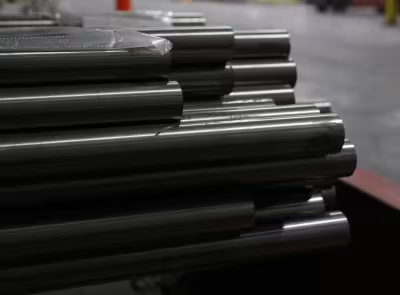
MP35N® alloy steel bar is a high‑performance cobalt‑nickel‑chromium‑molybdenum alloy prized for its exceptional combination of strength, corrosion resistance, and biocompatibility. Through a unique sequence of cold‑working and age‑hardening, it achieves some of the highest tensile and yield strengths of any alloy in its class while maintaining excellent resistance to stress‑corrosion cracking, hydrogen embrittlement, and pitting in harsh environments. Its stability in body fluids and non‑magnetic nature make it a trusted choice for medical implants, while its durability under extreme mechanical and chemical stress supports demanding aerospace, energy, and industrial applications. MP35N® stands out as a material engineered for reliability where failure is not an option.
Inventory Size Ranges for MP35N®
| Type | Size Range | AMS Standards | Get a Quote |
|---|---|---|---|
| Bar | 0.270" - 0.900" | AMS 5844 | Get a Quote |
Characteristics of MP35N®
MP35N® achieves extremely high tensile, yield, and fatigue strength through a combination of cold‑working and age‑hardening. MP35N® is among the strongest corrosion-resistant alloys available, resisting stress-corrosion cracking, putting and crevice corrosion, and hydrogen embrittlement. This alloy performs well in seawater, acidic environments, and chloride-rich conditions. MP35N® is biocompatible and non-magnetic, making it widely used for medical applications. This alloy maintains mechanical integrity under cyclic loading and harsh mechanical stress and retains strength and corrosion resistance across a broad temperature range. From cryogenic to elevated temperatures, MP35N® preforms reliably.
Working with MP35N®
MP35N® is highly work‑hardenable, meaning it strengthens rapidly as it is deformed. Cold working is essential for achieving its ultra‑high strength levels. Because it hardens so quickly, forming operations often require intermediate anneals to restore ductility and high-force equipment for significant deformation. Despite its strength, it can be formed into wire, strip, springs, and precision components with the right process controls. MP35N® is difficult to machine in its cold‑worked or aged condition due to its hardness. Best practices for machining include machining in the annealed condition whenever possible, using rigid setups, sharp carbide tooling, and slower speeds, and applying generous coolant to manage heat buildup. MP35N® is weldable, but technique matters, as cold-worked material near the weld may lose strength due to localized annealing. Gas tungsten arc welding (GTAW/TIG) is commonly used. Welds should be made in the annealed condition for best results. Post-weld aging can restore some strength, but weld zones rarely match the strength of fully cold-worked base material.
Other industry standards we comply with:
- SPS-M-663
- GE Aircraft Engine (GT193)
- GE Aviation S-SPEC-35 AeDMS S-400
- RR SABRe Edition 2
- DFARS Compliant
Common Trade Names
- Haynes MP35N (® Haynes International)
Industry Applications for MP35N®
- Aerospace fasteners
- Tie rods
- Chemical processing
- Medical devices
- Dental equipment
- Cryogenic equipment
- Marine equipment
- Oil Gas
- Food processing
Chemical Composition
| Element | Min | Max | |
|---|---|---|---|
| C | Carbon | - | 0.02 |
| Mn | Manganese | - | 0.15 |
| P | Phosphorus | - | 0.015 |
| S | Sulfur | - | 0.010 |
| Si | Silicon | - | 0.015 |
| Cr | Chromium | 19.00 | 21.00 |
| Ni | Nickel | 33.00 | 37.00 |
| Mo | Molybdenum | 9.00 | 10.50 |
| Co | Cobalt | - | Balance |
| Ti | Titanium | - | 1.00 |
| B | Boron | - | 0.010 |
| Fe | Iron | - | 1.00 |
Physical Properties
| Property | Value |
|---|---|
| Density | 0.304 lb/in3 |
Datasheet
Additional Info
A Brief History of MP35N®
MP35N® emerged in the mid‑20th century during a period of rapid innovation in high‑performance alloys. Engineers and metallurgists were searching for materials that could withstand extreme mechanical stress, corrosive environments, and cyclic loading—conditions that traditional stainless steels and nickel alloys struggled to endure. MP35N® quickly distinguished itself as a breakthrough cobalt‑nickel‑chromium‑molybdenum alloy capable of delivering extraordinary strength without sacrificing corrosion resistance or toughness. Over time, it became a trusted material in industries where reliability and durability are non‑negotiable.
How MP35N® Was Developed
MP35N® was engineered through a deliberate combination of alloy chemistry and advanced processing techniques. Its development centered on two key principles:
- A unique alloy composition blending cobalt, nickel, chromium, and molybdenum to maximize corrosion resistance and mechanical stability.
- A dual‑hardening mechanism, where the alloy is first cold‑worked to introduce high dislocation density and then age‑hardened to lock in exceptional strength.
This approach allowed MP35N® to achieve tensile and yield strengths far beyond those of conventional corrosion‑resistant alloys. The material’s resistance to hydrogen embrittlement, stress‑corrosion cracking, and fatigue made it especially valuable for demanding environments.
Early Applications of MP35N®
In its early years, MP35N® found rapid adoption in sectors that required materials capable of surviving extreme conditions. Early adoption from industries included aerospace, defense, oil & gas, medical, and fasteners.
How MP35N® is Used Today
Today, MP35N® remains one of the most versatile and reliable high‑strength alloys available. Its modern applications span multiple industries:
- Medical: Cardiovascular stents, orthopedic implants, surgical instruments
- Aerospace & Defense: Fasteners, springs, structural components
- Oil & Gas: Downhole tools, high-pressure connectors
- Industrial: High-strength wires and cables, precision mechanical components, chemical processing equipment
Your Trusted Supplier of MP35N® Cobalt
United Performance Metals offers MP35N® bar sizes 0.270" - 0.900". This product meets the AMS 5844 specifications.
Product FAQs
MP35N® has extremely high tensile and yield strength after cold-working and age-hardening. This alloy has outstanding resistance to stress corrosion cracking and hydrogen embrittlement and performs well in chloride-rich and acidic environments. MP35N® is non-magnetic and biocompatible.
MP35N® uses a dual-hardening mechanism. Cold work introduces high dislocation density and age hardening around 1000–1100°F increases strength and hardness. This combination produces some of the highest strength levels of any corrosion‑resistant alloy.