




UPM Space Materials and Applications
From thermal resistance to structural integrity, United Performance Metals has the materials and solutions needed to meet the uncompromising demands of space applications. We offer high-quality specialty metals, including nickel, titanium, stainless, and cobalt in select sheet, coil, bar, plate, and precision rerolled strip forms. Below is a guide to how these metals and alloys are used in varying applications throughout the space industry.
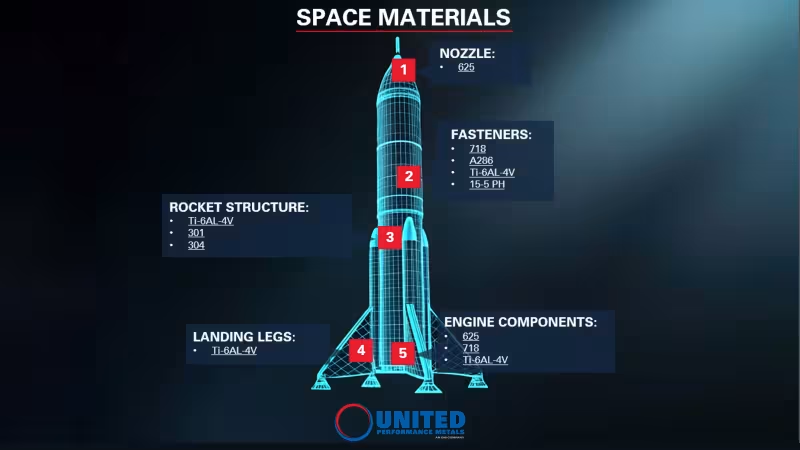
Nozzles: Rocket nozzles are structures that convert hot, high pressure combustion gases into high-velocity kinetic energy, creating thrust. The structure of these nozzles typically features a convergent section that tapers down and a divergent section that opens up, helping handle the dramatic pressure drop. Nickel alloy 625 is one of the most common alloys used for nozzle structures due to its ability to withstand extreme heat.
Fasteners: The fasteners used in space are specialized, high-strength, lightweight hardware that are designed to withstand extreme temperatures, vibrations, and vacuum conditions. Some of the most common applications include screws, bolts, nuts, and rivets. Grades 718, A286, Ti-6AL-4V, and 15-5 PH are some of the most common materials that United Performance Metals offers for space-grade fasteners.
Rocket Structure: Titanium grade Ti-6AL-4V is commonly used in rocket structures, as well as nickel grades 301 and 304. Rocket structures must be light-weight, high-strength, and capable of withstanding extreme pressures and temperatures.
Engine Components: Space engine components require high-performance, heat-resistance, and the ability to handle structural loads. Nickel alloys 625 and 718 are crucial for high-temperature engine applications, while titanium Ti-6AL-4V is preferred when high strength-to-weight ratios and cryogenic resilience is needed.
Landing Legs: Landing legs are engineered for high strength-to-weight ratios and impact absorption, taking Ti-6AL-4V the perfect materials. Modern systems are shifting toward materials that can handle the impact where older systems relied on one-time-use, using materials like aluminum that were crushable structures.
To learn more about how UPM aids the space industry, please click here.